



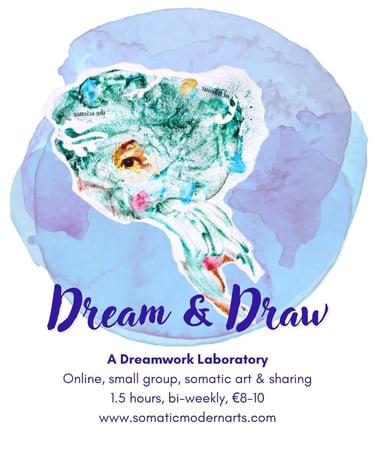
Dream & Draw
A Somatic Dreamwork Laboratory
A creative circle for working with your dreams
Like 'drink & draw' — but your unconscious is the live model.
What is Dream & Draw?
You know the concept of "drink & draw" — artists gathering around a live model, sketching together, with a drink and no pressure, just for fun and practice? Dream & Draw is the same spirit, but instead of a model, you bring your dream.
This is not a class or therapy but more of a laboratory — a regular, gentle space to meet your dreams through the body and through making. To slow down, listen, and see what's actually there.
Every two to three weeks we gather on Zoom for 1.5 hours. You bring a dream — or a fragment, an image, a feeling that's been following you. I offer somatic and art-based tools to work with it. You follow your own thread.
How it works
Opening: Someone shares a dream. Whole or fragmented, whatever came. We don't interpret or analyse. We simply offer it to the space and notice what resonates in the body.
Main practice: Using somatic and art-based methods, we work with the dream material. I guide the process and offer techniques, but there's no single right way. You might draw, write, move, or sit with what emerges. In some sessions, we work on one dream together. In other sessions, everyone follows their own. We go where the group goes.
Closing: Optional sharing. You can show what you made, speak about your process, or just witness others. There's no pressure to produce or perform.
What this gives you
Dreams speak, but often we don't know how to listen. And usually we've forgotten them by lunch.
Dream & Draw is a place to slow down and meet what came in the night. Not to decode it or mentally understand it. Just to be with it, through the body, through making, in good company. Over time, something might shift, and you will start to remember more. To trust the images, to find that your dreams are in conversation with your waking life in ways you hadn't noticed.
This is also about regularity. Creative and somatic practice opens up over time. Showing up every three weeks, in a consistent container, with the same people, that accumulates into something.
Who this is for
People who already work with dreams and want to go deeper, with support and community
People drawn to somatic and body-based approaches to inner work
Artists and creative practitioners who want to bring their unconscious into their practice
Anyone who has always been curious about their dreams but didn't know where to start
People who want regular creative practice but not formal instruction
No art experience or prior dream work needed. Just curiosity and willingness to show up.
When: every 2-3 weeks
New dates: July 16th and 31st, 7-8.30 pm CET
Duration: 1.5 hours
Where: Online (Zoom link sent upon registration)
Sliding Scale Pricing: €8-€10
What to prepare:
A couple of written dreams or fragments (alive, unfinished, forward-looking)
Paper or art notebook
Art materials of your choice (paints, markers, colored pencils, collage images/papers)
Have a space to move
Frequently Asked Questions
What if I don't remember my dreams well?
The workshop itself works with dreams you've already written down, but you can use little elements from them, just 2-3 dream fragments prepared beforehand. Or you can just come and work alongside others. All participants will receive a follow-up email with the "Dream Hygiene & Recall Guide" to support their ongoing dream practice. You can pick the dream from any time - it doesn't have to be recent.
Do I need to be 'good' at art?
Not at all. This isn't about making "good art"—it's about making your art. The creative process is intuitive and expressive. You're not creating something for display; you're creating a personal tool for guidance.
What materials do I need? Whatever you have — paper, paint, a sketchbook, your phone, a keyboard. We also work with movement and writing, so no materials are required.
Will I have to share my dream with everyone?
You choose your own level of sharing. You'll work privately with your dream during solo practices, share in pairs during movement work, or during group mirroring exercises. You're always in control of what you reveal.
What if I miss a session? That's fine. Come when you can. Each session is self-contained, and the circle continues.
Will the session be recorded? Can I just watch the replay?
A big part of this work is the group sharing and participation, so you'd really get the most out of the session by joining live. However, some parts of the instructions might be recorded. I tend to avoid recording personal sharing moments to keep them private and give the participants more freedom.
What if I can't move much or don't have space?
The movement practices are adaptable. Even sitting in a chair, you can work with gestures, hand movements, and small embodied expressions. You don't need a dance studio, just the same amount of space as for a yoga practice.
Is this therapy? No. It's a creative and somatic practice space. It can be deeply personal and sometimes surprising, but I'm not a therapist, and this isn't a therapeutic relationship.
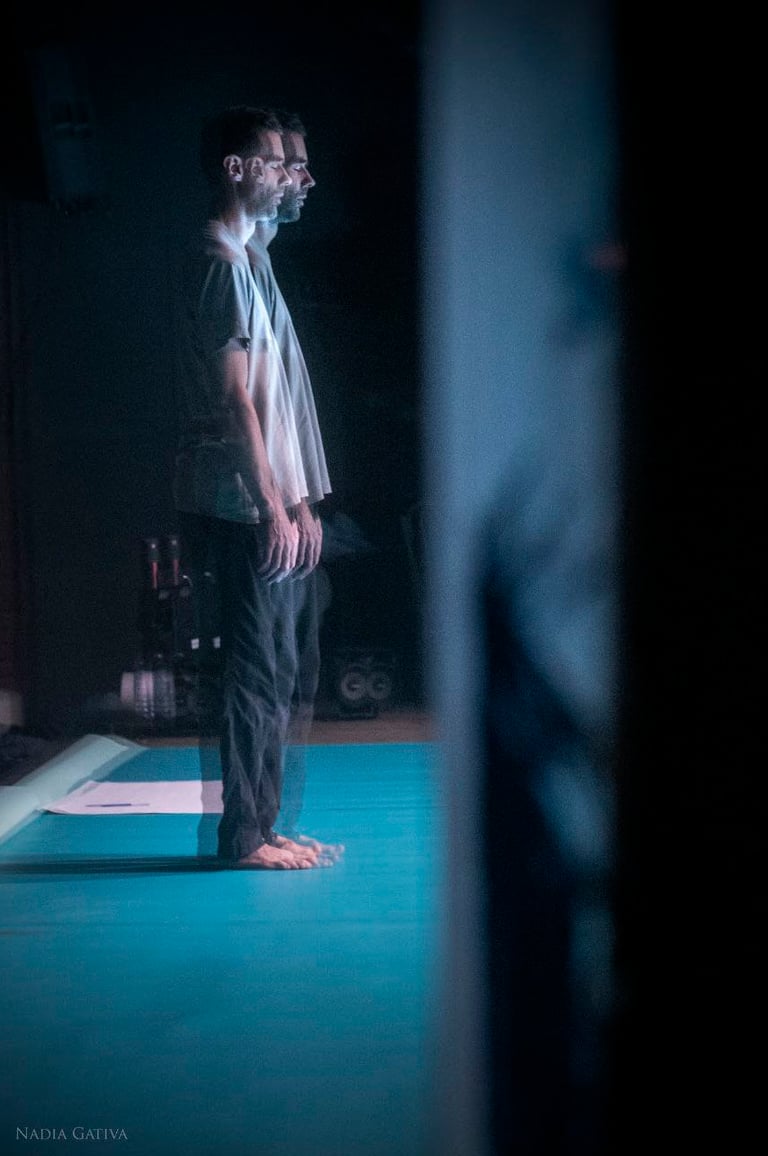
Some of the methods we use
Dream & Draw draws on a range of somatic and creative approaches. Sessions vary, so not every method appears every time, but these are the tools we work with:
Somatic art & somatic movement. We start with the body, not the mind. Before reaching for meaning, we notice physical sensation. Where does the dream live in you? What does it want to move? Somatic art uses materials and gesture a direct extension of body experience, bypassing the analytical mind.
Active imagination (Jungian). A practice of consciously entering the imaginal world: continuing a dream, speaking with a dream figure, or following an image to see where it leads. It's a dialogue with what the unconscious has offered.
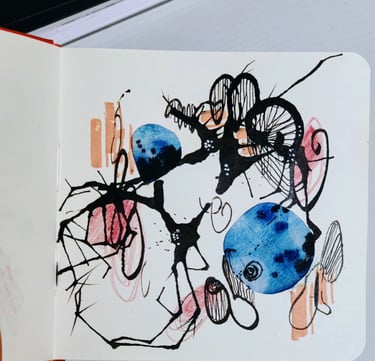
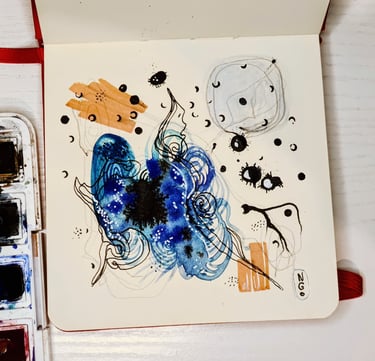
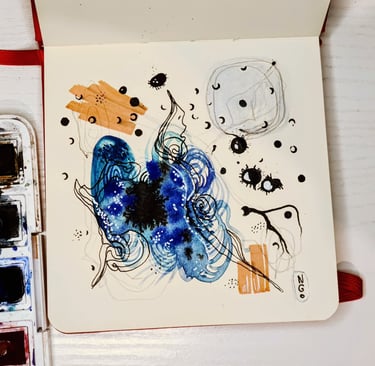
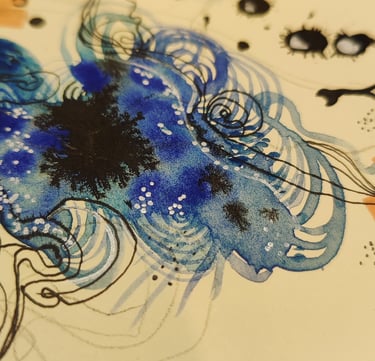
Art as witness / mark-making. You don't need to make something beautiful or meaningful. You make something that feels true for you. Mark-making as listening — letting the hand respond to the dream before the brain catches up.
Movement & gesture. Sometimes a dream doesn't want to be drawn; it wants to move. Simple, small gestures. Embodying a figure, a feeling, a colour from the dream. This doesn't require dance experience, just a willingness to follow an impulse.
Free writing/stream of consciousness. Writing without editing, without destination. Following the dream's logic rather than your own. Often, what appears on the page surprises you.
Dream journaling techniques. Simple practices for catching and staying with dreams over time; how to record them, how to return to them, how to notice patterns. We weave these in across sessions.
About the Facilitator
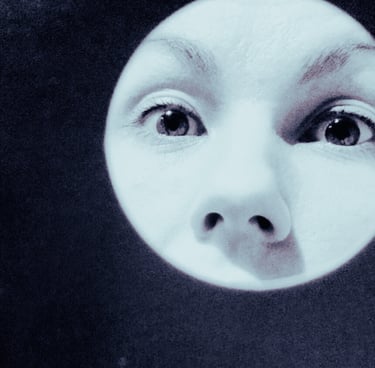
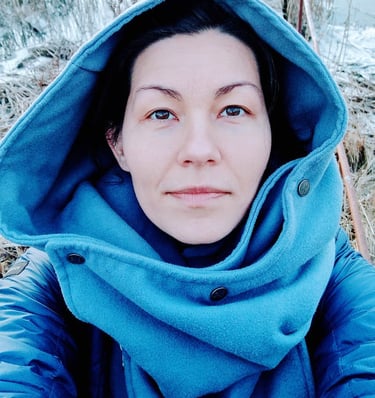
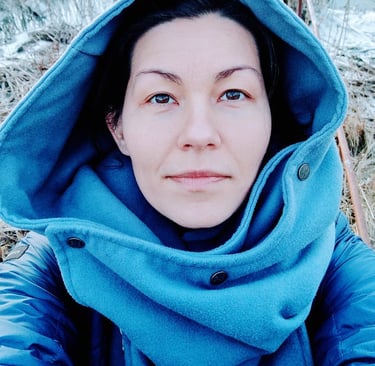
I'm a somatic movement and art educator who has been working with dreams since childhood. Over the years, I've studied different approaches to dreamwork—from Jungian depth psychology to process-oriented methods—and continue to practice through a mythological and animistic lens, drawing on the work of contemporary teachers.
For me, dreams aren't just puzzles to solve but living companions to walk with. This lab brings together everything I love: the intelligence of the body, the magic of creative practice, and the wisdom that comes when we listen to what dreams want to tell us.
What the participants say
"Working with dreams through body and art helped me tune into myself and experiment without self-criticism. I was surprised to see recurring themes in my dreams and drawings. In the end, I heard a very precise question from my wise body, which knows things long before I consciously realise them."
- Tatiana
"The somatic practices helped me receive answers in my dreams to questions that had been troubling me for a long time, and discover something new about myself. The body holds all the answers; these practices help us hear them."
- Ekaterina
"It was fascinating to explore dreams and creativity through somatics. Amazing how short practices can help you connect with the unconscious and create from there! Recommend 100%."
- Anna